
THE YOUNGBLOOD GUIDE
How to choose
pearl jewelry.
A little knowledge. A piece that feels like you.
Start with the way you dress, then compare pearl type, proportions and the details you will wear. Here is a practical guide to choosing cultured pearl earrings, necklaces and gifts from the Youngblood collection.
Explore cultured pearl jewelry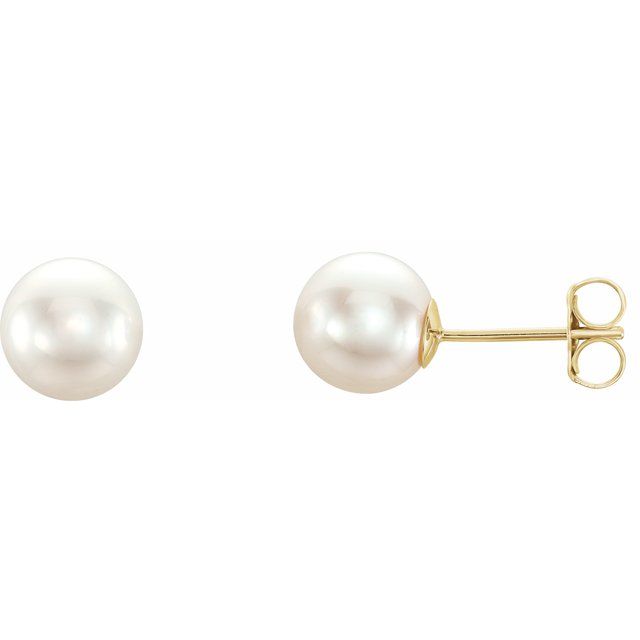
01 / THE PEARL
What does
“cultured” mean?
Cultured pearls are real pearls grown in a mollusk with human assistance to start the process. Natural pearls form without that intervention. “Cultured” describes how a pearl began; it is not another word for imitation.
Freshwater and Akoya are different pearl types, not two quality grades. Freshwater pearls are grown in freshwater mussels and offer a broad range of shapes and colors. Akoya pearls come from saltwater oysters and are often chosen for a round appearance and bright luster. Individual quality still varies.
Our collection identifies each piece’s pearl type. Compare the actual shape, surface appearance and light reflection as well as its name. If the pearl’s color treatment or a particular quality grade matters to you, ask us to confirm it for the exact piece.
Learn more: GIA’s explanation of pearl types.
02 / THE DETAILS
Look beyond
the photograph.
Product photographs are enlarged to show detail. Read the millimeter measurements and compare them with jewelry you already own. A pearl’s diameter and an earring’s overall dimensions are different measurements; a halo adds to the space a piece occupies.
- For earrings: check the pearl size, total dimensions, fastening and metal. A simple pearl design puts the pearl at the center; a diamond halo adds a contrasting outline.
- For necklaces: check the length, clasp and whether a chain is included. A station necklace spaces pearls along a chain; a strand creates a more continuous line.
- For gifts: notice the recipient’s usual metal color and jewelry proportions. A familiar style can be a more useful starting point than buying the largest pearl.
Luster, surface quality, shape, color, size, nacre and matching all contribute to pearl quality. Bigger alone does not tell the whole story.
Reference: GIA’s pearl buyer’s guide.
03 / YOUR POINT OF VIEW
Three ways to wear pearls.
A tailored shirt, an open neckline, an evening out. Choose the detail that suits your wardrobe.
THE SIMPLE ACCENT
7 mm Akoya pearl earrings
Choose 14K yellow or white gold. A clean pearl shape leaves room for the rest of your jewelry.
View the earrings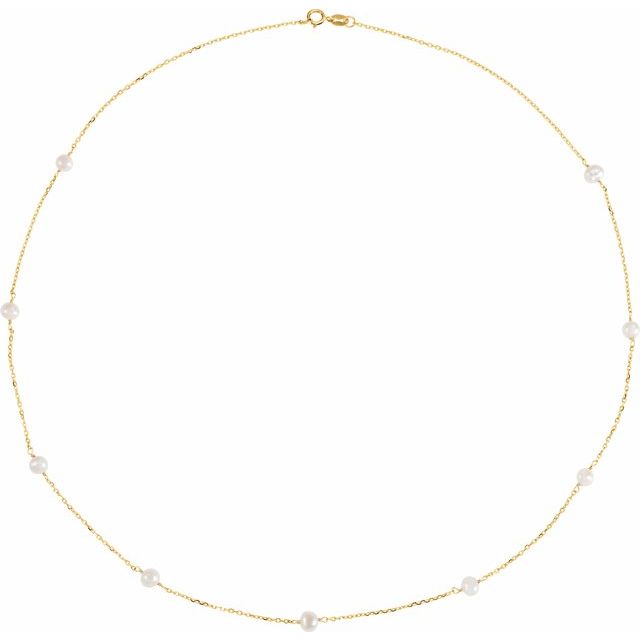
THE LIGHTER LAYER
A pearl station necklace
Nine 4.2 mm cultured freshwater pearls on an 18-inch 14K yellow gold cable chain. Try it with an open neckline.
View the necklace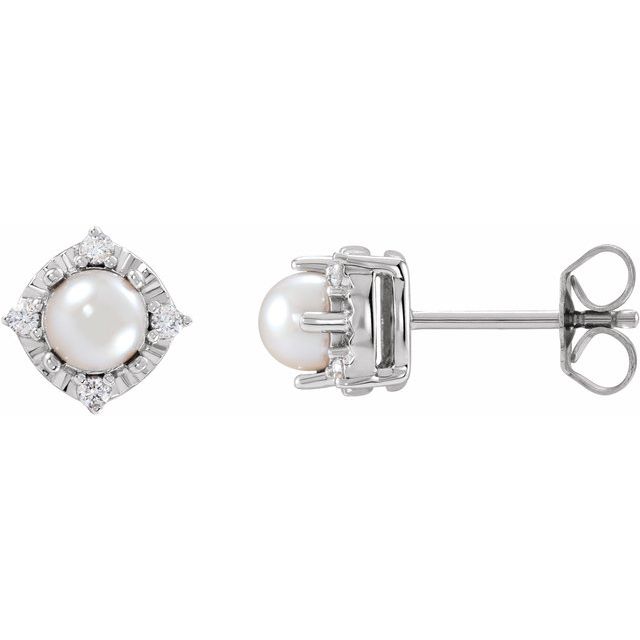
A LITTLE SPARKLE
Pearls with diamond accents
Cultured freshwater pearls with .08 CTW natural diamonds in sterling silver. A dressier detail for a favorite outfit.
View the halo-style earringsSee each product page for current options, price and availability. Images show product detail and are not to scale.
04 / KEEP THE GLOW
Give pearls
a gentle routine.
Put pearls on after perfume and cosmetics, then wipe them with a soft, clean cloth after wearing. Keep them away from heat and harsh chemicals. Do not use ultrasonic or steam cleaners on pearls.
For occasional cleaning, GIA recommends warm, soapy water; let a strung piece dry fully before wearing it. Check the care needs of the complete piece, including its setting and any other stones.
Care reference: GIA’s pearl care and cleaning guide.